The Best Cenotes in Quintana Roo: A Complete Guide for Travelers
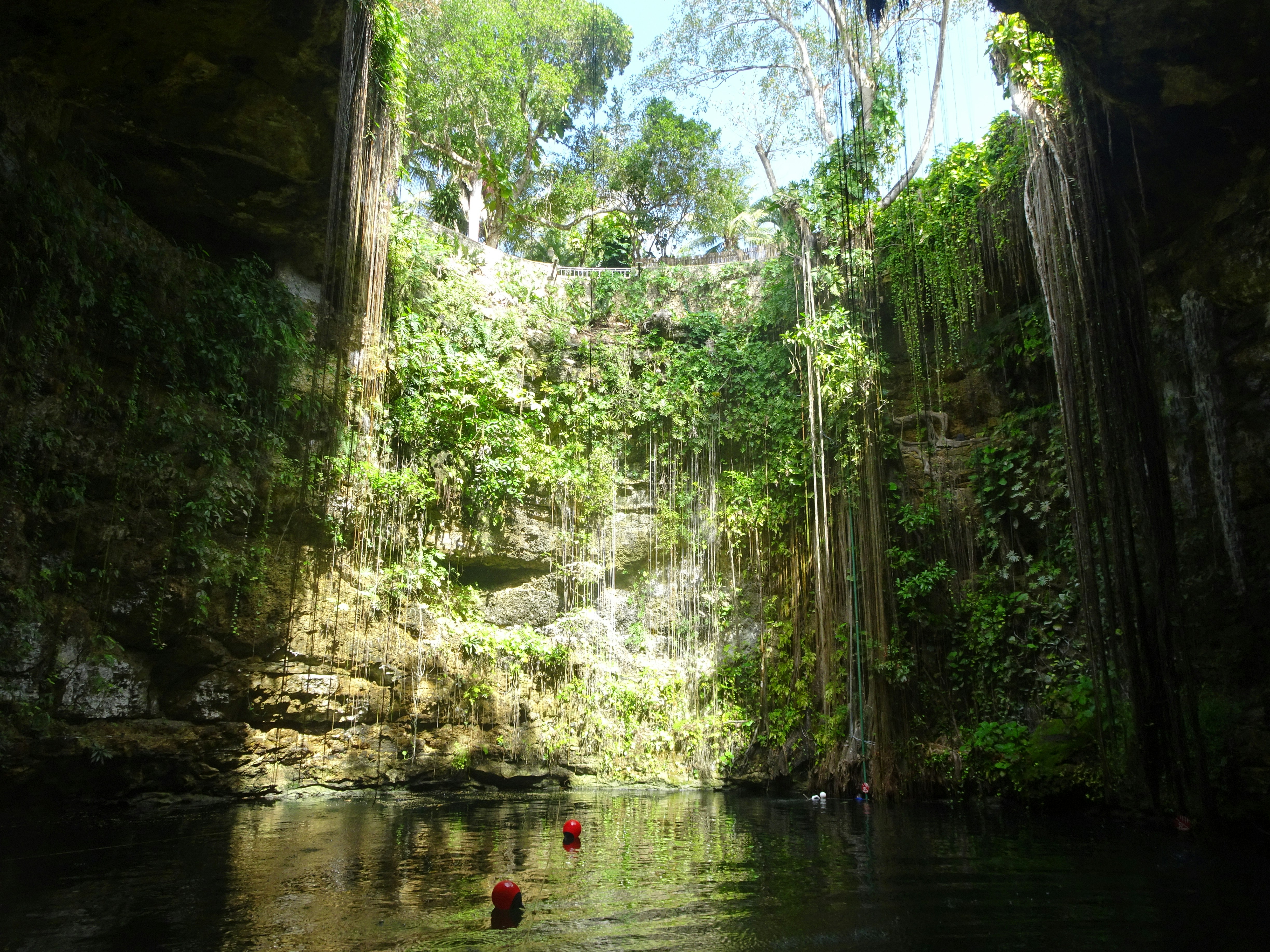
Discover 12 of the best cenotes in Quintana Roo, from Tulum and Playa del Carmen to Cancun and Valladolid, with current prices, opening hours, difficulty…
Long before cenotes became essential stops for swimming, snorkeling, and filming suspiciously cinematic underwater videos, they were already sacred and essential spaces for the Maya. Beyond providing fresh water, caves and flooded caverns were connected to the underworld and the journey toward Xibalba. That is why searching for the best cenotes in Quintana Roo is not only about finding somewhere beautiful to swim. It is also about entering an underground world deeply connected to the peninsula’s history, daily life, and Maya worldview.
The geological explanation is just as impressive. Much of the Yucatán Peninsula is formed from porous limestone. Rainwater filters underground, slowly dissolves the rock, and creates caves, underground rivers, and chambers whose ceilings can eventually collapse. Thousands of cenotes exist across the peninsula, and Quintana Roo contains some of the longest and most famous underwater cave systems on Earth.
Basically, there is another complete world beneath the Riviera Maya. We built roads, hotels, and cafés above it. The water has been working quietly below for thousands of years without requesting a single construction permit.
The prices and hours in this guide were reviewed in August 2026. Most cenotes are privately operated, so I always recommend confirming directly before leaving. Prices can change before Google, Instagram, and the person working at the ticket booth have had time to agree.
Cenotes Near Tulum
Tulum has some of the most famous cenotes in Quintana Roo.
It also has some of the highest entrance prices, because apparently the underground water knows it is close to the hotel zone.
Gran Cenote
Gran Cenote combines open swimming areas, covered passages, and small caverns. It is one of the easiest cenotes for swimming and snorkeling, although it can become crowded quickly because of its location near Tulum.
Type: Semi-open with cave sections
Approximate entrance fee: MXN $500–$600
Hours: 8:00 a.m.–4:45 p.m.
Difficulty: Easy
Best for: Families, snorkeling, and first-time visitors
My tip: Arrive when it opens. By midmorning, it can feel less like a natural wonder and more like a company-wide meeting inside the water.
Admission often includes a life jacket, while lockers and snorkeling equipment may cost extra. The entrance is located along the road from Tulum to Cobá.
Cenote Dos Ojos
Dos Ojos is part of an enormous flooded cave system. Its name means “Two Eyes,” referring to its two circular entrances, which are connected underground.
It is one of the most famous places in Mexico for cavern snorkeling and cave diving.
Type: Semi-open and cave
Approximate entrance fee: MXN $400–$500 for basic access
Hours: 8:00 a.m.–5:00 p.m.
Difficulty: Moderate
Best for: Snorkeling, cavern exploration, and certified divers
My tip: The road from the highway entrance to the actual cenote is long. Do not let a colectivo drop you at the main gate and assume you have arrived. You still have an important conversation with a taxi ahead of you.
Guided routes into deeper areas, including the Bat Cave and diving sections, cost extra.
Cenote Calavera
Cenote Calavera gets its name from the three openings in its ceiling, which resemble the eyes and mouth of a skull when viewed from above.
Its most famous entrance involves jumping directly through one of the openings into the water.
Type: Semi-open
Approximate entrance fee: MXN $250
Hours: 9:00 a.m.–5:00 p.m.
Difficulty: Moderate
Best for: Couples, younger travelers, and people who enjoy jumping
My tip: There is also a ladder. You do not have to jump just because someone holding a GoPro shouted, “Come on, it’s fine.”
The space is relatively small, so it is much more enjoyable earlier in the day.
Cenote Car Wash, or Aktun Ha
Its nickname comes from the time when taxi drivers in Tulum reportedly used the water to wash their vehicles.
Fortunately, that service is no longer included in the visitor experience.
Car Wash is an open cenote surrounded by vegetation, with clear water and a more natural atmosphere than many heavily developed sites.
Type: Open
Approximate entrance fee: MXN $200–$300
Reference hours: 9:00 a.m.–5:00 p.m.
Difficulty: Easy to moderate
Best for: Swimming, snorkeling, and relaxing
My tip: Bring a mask. The underwater plants and the way sunlight enters the water are a major part of what makes this cenote special.
Published prices vary depending on the activity, so confirm before arriving.
Want to visit several cenotes without driving or arranging every transfer yourself? Explore cenote tours near Tulum through YoYoPass.
Cenotes Near Playa del Carmen
The next three cenotes are located in almost the same section of Federal Highway 307, between Playa del Carmen and Tulum.
They are easy to combine, but honestly, I would choose two.
Visiting three very similar cenotes in one day can begin to feel like an official audit of life jackets and changing rooms.
Cenote Azul
Cenote Azul is large, open, and has several shallow areas. It is one of the best options for families and travelers who are not comfortable entering a dark cavern immediately.
Type: Open
Approximate entrance fee: MXN $180–$200
Hours: 8:30 a.m.–5:30 p.m.
Difficulty: Easy
Best for: Children, families, and beginner swimmers
My tip: Move away from the main entrance. The side areas are usually quieter.
The property has bathrooms, parking, and equipment rentals. Rates for Quintana Roo residents and children may be different.
Jardín del Edén
Jardín del Edén looks like an enormous natural swimming pool surrounded by jungle. It has deep sections, jumping platforms, and enough space that it can still feel comfortable with several visitors.
Type: Open
Approximate entrance fee: MXN $300 per adult
Hours: 8:00 a.m.–5:00 p.m.; last admission around 4:00 p.m.
Difficulty: Moderate
Best for: Swimming, jumping, and spending several hours
My tip: Check the operating day before visiting. It is currently reported as closed on Saturdays.
I recommend knowing how to swim or wearing a life jacket because some sections are considerably deeper than they appear.
Cenote Cristalino
Cristalino combines open swimming areas, short covered passages, and an easy cave section.
It is compact and can be a good alternative when Cenote Azul or Jardín del Edén feels too crowded.
Type: Semi-open
Approximate entrance fee: MXN $200–$400
Reference hours: 9:00 a.m.–5:00 p.m.
Difficulty: Easy to moderate
Best for: Snorkeling and groups with different swimming abilities
My tip: Walk around the entire property before choosing where to leave your things. The first swimming area you see is not necessarily the best one.
Published prices vary considerably, so confirm whether the life jacket is included.
From Playa del Carmen, you can take a colectivo toward Tulum and ask the driver to drop you near the cenote entrance.
Just remember that crossing Federal Highway 307 with a backpack, wet towel, and zero shade is not exactly the vacation advertisement you imagined.
Find guided cenote experiences from Playa del Carmen through YoYoPass and let someone else handle the transportation.
Cenotes Near Cancun
For travelers staying in Cancun, the Ruta de los Cenotes near Puerto Morelos is the most convenient area.
The route extends inland toward Leona Vicario and includes open cenotes, caves, and adventure parks less than an hour from the city.
Verde Lucero
Verde Lucero is an open emerald-colored cenote with a zipline and jumping platforms.
It is fun, uncomplicated, and especially good for groups.
Type: Open
Approximate entrance fee: MXN $300–$350
Reference hours: 9:00 a.m.–5:00 p.m.
Difficulty: Moderate
Best for: Groups, younger travelers, and adventure activities
My tip: Do not spend the entire visit waiting for the zipline. Swim toward the edges to appreciate the cenote’s size and water color.
Recent rates can vary according to age, residency, and included activities.
Las Mojarras
Las Mojarras is one of the largest open cenotes along the route.
It has platforms and a zipline, but the main attraction is the amount of open space available for swimming.
Type: Open
Approximate entrance fee: MXN $250
Hours: 9:00 a.m.–6:00 p.m.
Difficulty: Easy to moderate
Best for: Families and larger groups
My tip: Wear a life jacket even when you know how to swim. The cenote is large, and distances can look shorter than they really are.
The property is located around kilometer 12.5 of the Ruta de los Cenotes.
Siete Bocas
Siete Bocas connects several natural openings within one cavern system.
Some entrances receive direct sunlight, while others feel completely underground.
Type: Semi-open and cave
Approximate entrance fee: MXN $300–$400
Hours: 8:30 a.m.–5:00 p.m.
Difficulty: Moderate
Best for: Cave exploration and snorkeling
My tip: Give yourself at least two hours. Visiting only one of the “seven openings” slightly defeats the concept.
Paths can be slippery, and some areas require more confidence in the water.
Public transportation between individual cenotes along the route is limited. You can reach Puerto Morelos by bus or colectivo, but you will normally need a taxi, rental car, or organized tour to explore the route.
Explore Ruta de los Cenotes tours through YoYoPass when you would rather use your energy for swimming than searching for unmarked dirt-road entrances.
Cenotes Near Valladolid
Valladolid is located in Yucatán state, not Quintana Roo.
I am including it because it is one of the most popular day trips from Cancun and the Riviera Maya, especially when combined with Chichén Itzá.
One important detail: Yucatán is one hour behind Quintana Roo. Your phone will normally adjust automatically, but after two and a half hours on the road, your brain may choose not to participate.
Cenote Suytun
Suytun is famous for the circular stone platform positioned beneath a narrow beam of light inside the cavern.
It is impressive, but it is also one of the most photography-focused cenotes in the region.
Type: Cave
Entrance fee: MXN $420 with the published day pass
Cenote hours: 9:00 a.m.–4:00 p.m.
Difficulty: Easy
Best for: Photography and couples
My tip: Do not expect to keep the platform to yourself for twenty minutes. Take the photo and let the line continue. Everyone came to create their own magazine cover.
The current day pass includes cenote access, a swimming pool, one meal, and the Ruta del Alux experience.
Cenote Samulá
Samulá is located within the Dzitnup complex beside X’kekén.
An opening in the ceiling allows sunlight to reach the water, while long tree roots descend from the surface into the cavern.
Type: Cave
Approximate entrance fee: MXN $220–$250 for combined access to Samulá and X’kekén
Hours: 9:00 a.m.–5:00 p.m.
Difficulty: Easy to moderate
Best for: Families and trips combined with Valladolid
My tip: Buy the combined ticket when the price difference is small. You already drove to Valladolid. Reaching the entrance of the second cenote and deciding you have had enough culture would be a strange place to become financially disciplined.
Published rates vary between platforms and dates, so confirm the current individual and combined admission price.
Important Rules When Visiting Cenotes
Shower Before Entering
The shower is not decorative.
It removes sunscreen, makeup, mosquito repellent, perfume, creams, and oils that can pollute the water.
“Biodegradable” Does Not Always Mean Permitted
Many cenotes prohibit all sunscreen in the water, including products labeled biodegradable or reef-safe.
The safest option is to enter without products and protect yourself outside the water with a hat, shade, and long-sleeved UV clothing.
Biodegradable sunscreen is not a diplomatic passport that allows you to ignore the rules.
Do Not Touch Stalactites or Rock Formations
These structures can take thousands of years to grow and can be damaged through simple contact.
Do not use them for balance, hang equipment from them, or touch them to improve a photograph.
Wear a Life Jacket When Required
Some cenotes require life jackets for everyone. Others make them optional.
Wear one when you are not a strong swimmer, when the water is deep, or when visiting with children.
Do Not Bring Speakers
Sound echoes through caves and affects everyone’s experience.
The jungle already has its own soundtrack. It does not need someone adding reggaeton through a waterproof Bluetooth speaker.
How to Visit Cenotes Without a Car
It is possible to visit cenotes without renting a car, although some are much easier to reach than others.
From Playa del Carmen
Colectivos traveling toward Tulum can drop you near Cenote Azul, Cristalino, and Jardín del Edén.
Confirm the stop with the driver before boarding and be prepared to cross or walk beside the highway.
From Tulum
Gran Cenote and Calavera can be reached by taxi, bicycle, or transportation heading toward Cobá.
Car Wash may also be accessible using colectivos along the same road. Dos Ojos is more complicated because there is a considerable distance between the highway entrance and the final cenote access.
From Cancun
You can reach Puerto Morelos by bus or colectivo, but entering and moving between cenotes along the Ruta de los Cenotes normally requires a taxi or organized tour.
From Valladolid
Suytun and Samulá are easy to visit by taxi from the town center.
You can reach Valladolid by bus from Cancun, Playa del Carmen, or Tulum and arrange local transportation after arriving.
When visiting more than one cenote, an organized tour often costs less energy—and occasionally less money—than combining colectivos, taxis, and several conversations beginning with, “Are you sure this is the right place?”
Browse cenote tours available through YoYoPass to compare routes, transportation, admission, and activities before booking.
Which Are the Best Cenotes in Quintana Roo?
That depends on the type of day you want.
Best for families: Cenote Azul
Best for caves: Dos Ojos
Best for photography: Suytun
Best near Cancun: Siete Bocas
Best for several hours of swimming: Jardín del Edén
Best for jumping and adventure: Verde Lucero
Best relaxed experience: Car Wash
Best first visit: Gran Cenote
My recommendation is to visit one open cenote and one cave cenote.
That way, you understand the real variety of these systems instead of leaving with the impression that every cenote is the same swimming pool with a different ticket booth.
Frequently Asked Questions
How much does it cost to visit cenotes in Quintana Roo?
Independent cenotes generally cost between MXN $180 and $600 per adult.
Parks offering several caves, guides, food, ziplines, or ATVs can cost more than MXN $1,000.
Always ask whether the price includes a life jacket, locker, guide, and snorkeling equipment.
Is it safe to swim in cenotes?
Yes, when you follow the rules, wear a life jacket when necessary, and stay out of restricted areas.
The main risks are depth, slippery surfaces, low lighting, and overestimating your swimming ability.
Inside cave cenotes, stay within authorized areas and never attempt cave diving without certification and a specialized guide.
Can I take children to cenotes?
Yes.
Cenote Azul, Las Mojarras, and some sections of Gran Cenote are good options for families.
Choose cenotes with easy access, shallow areas, bathrooms, and child-sized life jackets. Maintain constant supervision. Clear water does not necessarily mean shallow water.
Do I need to know how to swim?
Not always.
You can enjoy some cenotes from platforms and use a life jacket to enter the water.
Tell the guide or staff when you cannot swim and avoid locations focused on jumping, strong currents, or deep cave areas.
What is the best time to visit cenotes?
At opening time, generally between 8:00 and 9:00 a.m.
There will be fewer groups, cooler temperatures, and better photography conditions.
At some cave cenotes, the strongest beams of sunlight appear closer to midday—but that is also when more visitors arrive.
The Best Cenotes in Quintana Roo: A Complete Guide for Travelers