Is There a Seaweed-Free Season in Cancun and Playa del Carmen?
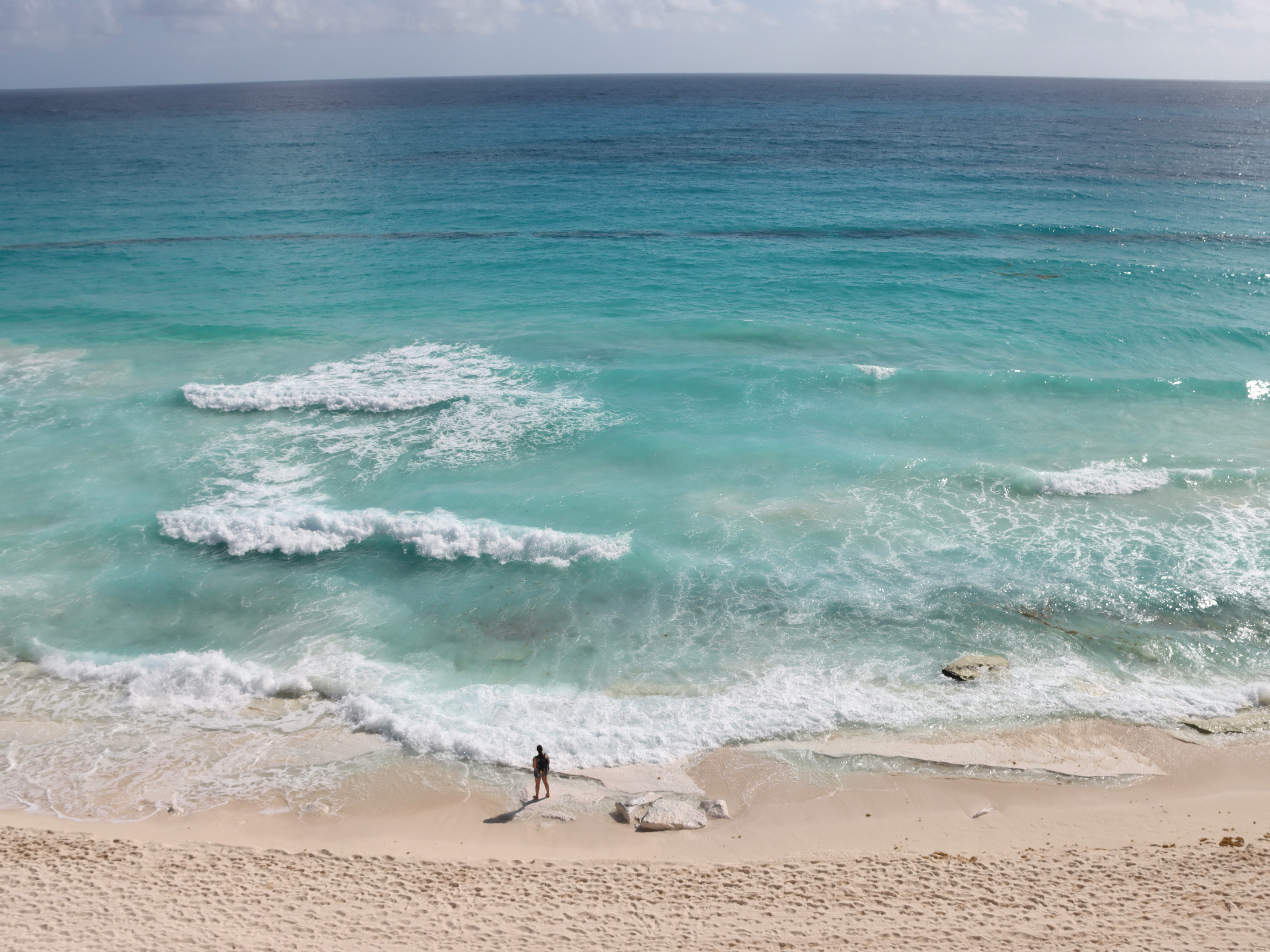
Is there a seaweed-free season in Cancun? Here’s the honest answer, plus when to visit, how to check beach conditions and what to do if sargassum shows up.
Is There a Seaweed-Free Season in Cancun and Playa del Carmen?
You’ve finally booked the Caribbean trip.
The flights are confirmed, the swimsuit is packed, and your weather app has become a daily obsession. Then someone mentions sargassum, and suddenly you’re questioning everything.
Will the beach be covered in seaweed? Is there a month when it disappears? Should you have booked a cabin in the mountains instead?
Let’s not get ahead of ourselves.
There is no guaranteed seaweed-free season in Cancun or Playa del Carmen. But there are times of year when arrivals are generally lower, and there are ways to check conditions before you travel.
And if sargassum does show up? You’re in the Mexican Caribbean. Your vacation options extend a little further than one stretch of sand.
First: what is sargassum?
Sargassum is a type of floating brown seaweed. Out in the ocean, it provides food and shelter for marine life. It’s a natural part of the ecosystem.
The issue for beachgoers starts when large amounts reach the coast and collect along the shore. As the seaweed breaks down, it can produce a strong smell and make some areas less pleasant for swimming or relaxing.
So no, it isn’t just “dirty water.” It’s a natural phenomenon that can become a problem when too much arrives at once.
For more on its role in the ocean, check NOAA’s guide to sargassum.
Is there a seaweed-free season in Cancun?
Not officially, and definitely not one we can guarantee.
Sargassum doesn’t check your travel dates before moving through the Caribbean. Wind, currents and waves all influence where it goes, and conditions can change from one beach to another.
That said, the Mexican Caribbean’s tourism board describes the main season as generally running from April to October, often with heavier arrivals between May and August. The amount varies significantly by year and location.
You can check its Mexican Caribbean weather and seasonality guide for an overview.
The takeaway? There are better odds during some months, but there is no “book this week for guaranteed clear water” button. If there were, we’d be using it too.
When is seaweed season in Cancun and Playa del Carmen?
Here’s a useful way to think about the year:
Time of year | What to expect |
|---|---|
December–February | Often lower arrivals compared with the main season, but sargassum can still appear. |
March–April | A transition period when arrivals may begin increasing. |
May–August | Generally part of the main period for larger arrivals. |
September–November | Conditions can remain variable and may begin to ease. |
These are general patterns, not a forecast for your hotel beach. A clear day in July is possible. So is seaweed in January.
The amount of sargassum arriving offshore can also change dramatically from year to year. That’s why we’d pay more attention to recent conditions than a photo someone posted during their vacation two summers ago.
Is there less seaweed in Cancun from December to February?
Usually, this is a good period to consider if you want a lower chance of encountering heavy sargassum arrivals. December, January and February generally sit outside the main April-to-October season described by the regional tourism board.
For anyone escaping winter in Canada or the northern U.S., that’s a pretty nice combination: warm weather and a season that often sees less seaweed.
But we wouldn’t promise that there will be “almost none.” Researchers have documented substantial sargassum presence in the western Caribbean during winter, too. Nature doesn’t read travel blogs. frontiersin.org
If you’re deciding when to travel, choose dates that also work for your budget, schedule and preferred crowd levels. Then check beach conditions closer to your trip.
Visiting in December? Our Cancun in December guide covers the weather, holiday crowds and things to do.
Is sargassum worse in Cancun or Playa del Carmen?
It depends on the day and the beach.
Cancun and Playa del Carmen sit along different parts of the coast. Beaches face different directions, which means wind and currents don’t affect every stretch of sand in exactly the same way.
You could find more sargassum in one area and less somewhere nearby. Conditions can also change after your first day.
Instead of asking, “Does Playa del Carmen have seaweed?” ask a more useful question:
“What does the beach at my hotel look like right now?”
That answer will help you plan much more than a general statement about an entire destination.
What about Isla Mujeres and Cozumel?
Islands can experience different conditions from the mainland, and some beaches may have less sargassum depending on their location and orientation.
That doesn’t mean Isla Mujeres or Cozumel is always seaweed-free. Check recent conditions at the specific beach you want to visit before booking a boat just to escape the seaweed.
Still, both islands offer more than a place to swim. Isla Mujeres has food, downtown streets and coastal views; Cozumel offers its own mix of activities and places to explore.
Start with our guide to things to do in Isla Mujeres.
How to check Cancun seaweed conditions before your trip
You don’t need to become a marine scientist. You do need information that’s recent and specific.
Ask your hotel for a current photo
A few days before you travel, ask your hotel what its beach looks like. A recent photo or video of the actual property can be more useful than a general destination update.
Ask when it was taken and whether conditions have changed recently.
Check CONABIO’s monitoring system
Mexico’s CONABIO SATsum platform monitors sargassum offshore and provides forecasts for coastal areas.
One important detail: satellite monitoring shows conditions at sea. It does not confirm exactly how much sargassum is already on a particular hotel beach.
Use it to understand the regional situation, then check locally for the beach itself. simar.conabio.gob.mx
Look at regional reports
The University of South Florida’s Sargassum Watch System publishes regional observations and outlooks.
It’s useful for understanding broader trends, although it can’t promise what your beach will look like on a particular Tuesday afternoon.
Check the date before you panic
That alarming video could be from another beach, another month or another year.
Before you let a social media post ruin your mood, check where and when it was recorded. Your vacation deserves more than a conclusion based on a random caption.
What to do if there’s sargassum during your trip
Let’s say you arrive and your hotel beach has more seaweed than you hoped.
Annoying? Yes.
The end of the trip? Not even close.
Here are some ways to spend the day away from the shoreline.
1. Swap the beach for a cenote
Cenotes are freshwater sinkholes found throughout the Yucatán Peninsula. They offer a completely different swimming experience and aren’t affected by ocean sargassum the way a coastal beach can be.
Some are open to the sky. Others take you into caves or underground spaces. Choose based on how much time you have and what your group actually enjoys.
A few things to check before booking:
Transportation and pickup.
Whether a guide is included.
Life jacket requirements.
Stairs and accessibility.
Shower and sunscreen rules.
For a combination of history and freshwater swimming, compare the Cobá Ruins & Maya Cenote experience on YoyoPass.
Want to compare more routes? Read our guide to the best cenotes near Cancun.
2. Spend an adventure day at Xplor
If your group’s response to a beach problem is “fine, let’s go ziplining,” Xplor might be your move.
The park offers an adventure-focused day with activities away from the beach. It’s a good option for travelers who want to trade the sun lounger for something a little more active.
Check age and activity restrictions, transportation and the current listing before you book.
Explore the Xplor tour with transportation on YoyoPass.
3. Explore Xcaret
Xcaret works well when your group wants options. Some people can focus on cultural experiences and exhibitions, while others spend time in the park’s water areas.
Its underground river activities offer a different plan from a beach day. Just remember that Xcaret also has coastal areas, and their conditions can vary, we’re not promising that every part of the park will be free of sargassum.
Compare current inclusions through Xcaret Plus on YoyoPass.
4. Visit an archaeological site
A little seaweed might be the reason you finally leave the hotel and see something you’ll still be talking about after the tan fades.
Chichén Itzá is a full-day trip from Cancun, but it’s worth considering if it’s on your list. You can also explore other archaeological sites depending on where you’re staying and how much time you want to spend in transit.
Our Chichén Itzá from Cancun guide covers transport, timing and what to check before booking.
5. Try another beach but check first
Sometimes another stretch of coast has different conditions. Ask locally for a recent update before making the journey.
And remember: a beach with less sargassum isn’t automatically safer for swimming. Check the flags, currents and local instructions too.
Can you swim when there’s sargassum?
Follow the guidance of lifeguards, local authorities and your hotel. Avoid swimming through large accumulations, and keep an eye on beach flags and currents.
Large piles decomposing on shore can release hydrogen sulfide, which causes the strong smell and may irritate the respiratory system. If the smell is strong or you feel irritation, move away from the area. People with asthma or other respiratory conditions should be especially attentive.
NOAA explains the potential effects of sargassum on shore.
Should you cancel your trip because of seaweed?
Not automatically.
If your entire vacation depends on one specific beach being perfectly clear, check current conditions and your booking policies. That’s a reasonable thing to do.
But if you’re coming for the bigger picture, Caribbean water, food, cenotes, culture and experiences, you have options.
Pick the dates that work for you. Check the beach before you go. Save a couple of backup plans.
Then put the seaweed map down and enjoy your vacation.
Frequently Asked Questions
Is there a seaweed-free season in Cancun?
There’s no guaranteed seaweed-free season. Arrivals often follow seasonal patterns, but conditions vary by beach, weather and year.
When is Cancun seaweed season?
The main period is generally described as April through October, often with heavier arrivals between May and August. The timing and amount can change each year.
Is there sargassum in Cancun in December?
There can be. December is often associated with lower arrivals than the main season, but a clear beach isn’t guaranteed.
Is Playa del Carmen affected by sargassum?
Yes. Playa del Carmen can receive sargassum, with conditions varying along the coast and throughout the year.
Is Isla Mujeres always seaweed-free?
No. Some beaches may experience different conditions from the mainland, but no beach is guaranteed to be free of sargassum.
What can I do if my hotel beach has sargassum?
Consider a cenote, an adventure park, an archaeological site or another activity away from the affected beach. Check current conditions before changing your plans.
Is There a Seaweed-Free Season in Cancun and Playa del Carmen?