Tulum Ruins and Beach: Complete 2026 Visitor Guide
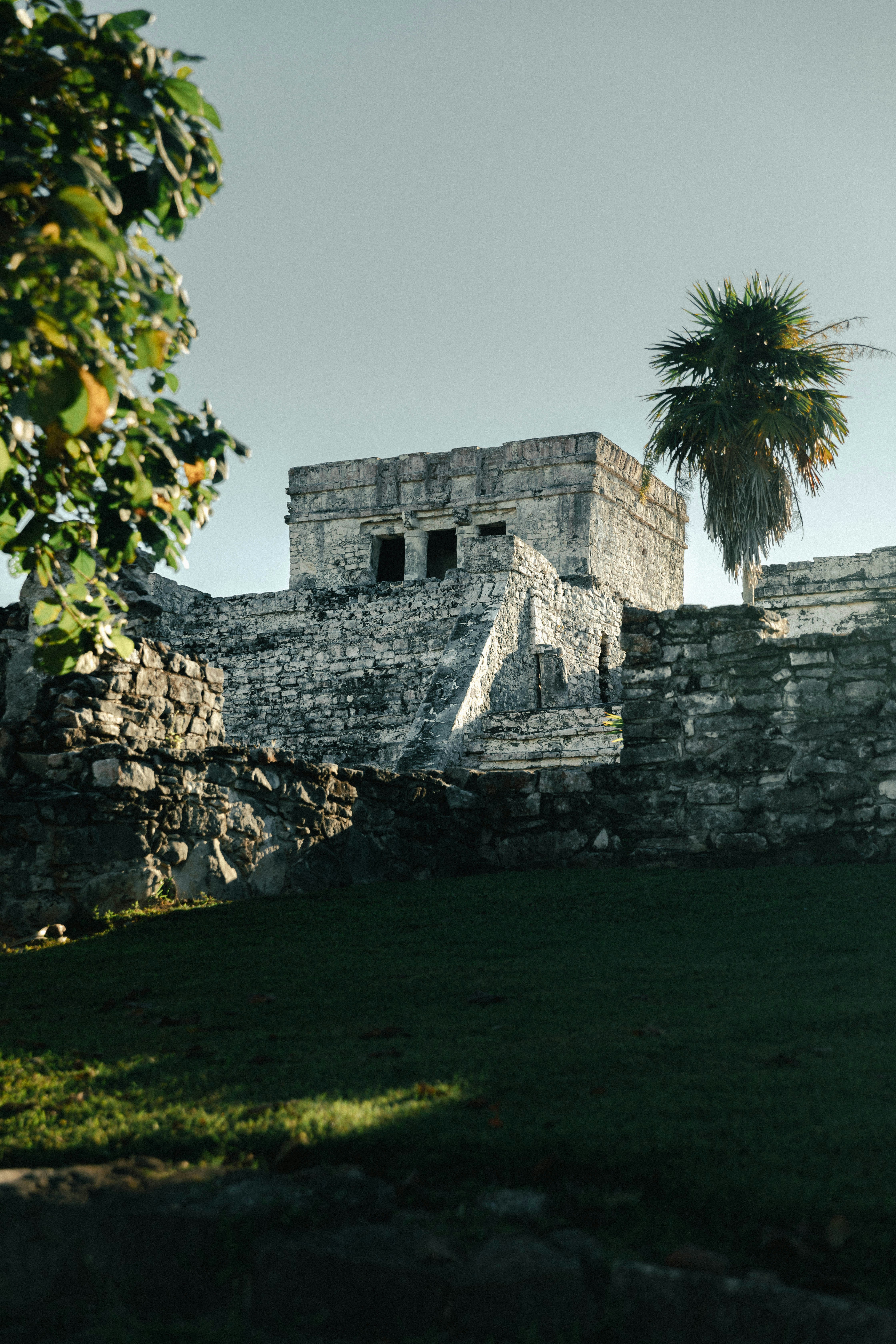
Tulum’s ruins are famous for the cliff view. A good visit depends on timing, heat, tickets, transport, and whether beach access is operating.
The Tulum ruins have one unfair advantage over almost every archaeological site in Mexico: the Caribbean is directly behind them, behaving as though it was hired by the tourism board. The setting is extraordinary. The midday heat, ticket logistics and crowds can be equally committed.
This Tulum ruins and beach guide explains how to time the visit, what to verify before leaving, how transport works and why beach access should be treated as a possible bonus rather than the only reason to go. The ruins are real history, not an elaborate backdrop for swimwear.
Tulum Ruins Quick Facts for 2026
Let's get the important stuff out of the way first.
Opening Hours
The official INAH listing currently shows the archaeological zone open every day from 8:00 a.m. to 5:00 p.m., with last entry at 3:30 p.m.
Not 4:30.
Not “we'll get there around sunset.”
3:30 p.m.
Honestly, you should be leaving around that time anyway.
Tulum at 1:00 p.m. has the special ability to make you question whether humans were designed to exist outdoors.
Current Entrance Fee
This changed significantly in July 2026.
Under the federal Plan Tulum Renace, the government announced a new integrated price of:
MXN $80 for Mexican visitors
Free on Sundays for Mexican visitors
MXN $265 for international visitors
The new ticket includes archaeological-zone and protected-area access, while entrance to Parque del Jaguar itself became free.
One important warning: some official INAH pages are still showing the previous fee structure, including separate INAH, CONANP and Parque del Jaguar charges. The July 2026 government reform is newer, so I would still verify the displayed total at the official ticket office when you arrive.
This might be the most Tulum sentence in the guide:
The ancient city is easier to understand than its recent ticket history.
Parque del Jaguar
Access to Parque del Jaguar is now free, while the internal electric transportation has been reduced to around MXN $20 under the 2026 plan.
You can walk.
You can also pay the twenty pesos.
If it is 11:30 a.m. and you have already been outside for two hours, this becomes an extremely easy financial decision.
Parking
Parking arrangements around Parque del Jaguar have changed several times as the access system has been reorganized.
There are parking areas near the visitor facilities and entrances, but I would not budget around the old MXN $200 figure in the original brief. Parking charges vary by lot, and the 2026 plan also includes changes to southern access and ecological parking infrastructure.
Confirm the posted price before leaving the car.
Do not hand cash to a random man aggressively explaining that his lot is “official official.”
Photography
Normal tourist photography is fine.
Professional photography equipment can require an additional INAH fee, and pets, smoking and food are prohibited inside the archaeological zone.
Do not arrive planning to fly your drone over El Castillo. Drone operation over archaeological zones requires authorization and is not something a regular visitor should expect to do.
Also:
Everybody has already seen the drone shot.
You can survive with the normal camera.
History of the Tulum Ruins
Before Tulum became the background of approximately 4 million profile pictures, it was a strategically important Maya city.
The buildings visible today are mainly from the Middle and Late Postclassic period, roughly 1250–1550, although evidence shows the settlement has earlier origins. INAH considers Tulum one of the principal Maya cities of the thirteenth and fourteenth centuries.
Its location was incredibly useful.
The city sat between important Maya provinces, occupied one of the highest points along this stretch of coastline and had direct access to marine resources and Caribbean trade routes.
The cliff was not just there to make the place pretty.
It was infrastructure.
Tulum was surrounded by a defensive wall on three sides, while the Caribbean protected the eastern side. The wall had five entrances and watchtowers, making the city unusually fortified for the region.
The original name may have been Zamá, often translated as “dawn” or “morning,” probably because the city faces east toward sunrise.
“Tulum” is a later name meaning something closer to wall, enclosure or palisade.
Which is historically accurate.
Slightly less poetic.
The Spanish Arrive
In 1518, members of Juan de Grijalva's expedition saw a large coastal settlement that historians believe was probably Tulum. The chronicler Juan Díaz described a city that appeared remarkably substantial from the sea.
At that point, Tulum was still inhabited.
That is one of the details I find most interesting.
When Europeans first arrived on this coastline, this was not an abandoned ancient ruin.
People were living here.
Trading.
Practicing religion.
Maintaining buildings.
Using the port.
The city's decline came afterward as Spanish colonization, disease and wider regional disruption devastated Maya communities. By 1579, colonial accounts described Tulum as largely ruined.
Standing there feels different once you know that.
What to See at the Tulum Ruins
You do not need four hours.
The archaeological area is relatively compact.
But do not just march directly toward El Castillo, take one photo and leave.
Several smaller structures explain why the city mattered.
El Castillo
This is the building.
The one on every postcard.
El Castillo sits in the central ceremonial precinct at the cliff edge and is the tallest structure at the site. INAH notes that it went through multiple construction phases and contains architectural details including serpent-shaped columns and surviving representations of a descending deity.
Its position overlooking the sea was probably not accidental.
The small cove below interrupts the limestone cliff and provided a natural landing point for fishing and trading canoes. INAH suggests this inlet was used for boats arriving and departing from the city.
Suddenly El Castillo feels less like a dramatic ocean-view temple and more like part of an actual functioning port.
Still an excellent ocean view.
Both can be true.
Best photo
Walk toward the cliffside viewpoints rather than trying to photograph the building directly from the central path.
Go early.
At 8:15 a.m., you might get a relatively clean photo.
At noon, your photograph will document both Maya architecture and global tourism demographics.
Temple of the Descending God
This smaller temple gets its name from the upside-down or descending figure depicted above its entrance.
The motif appears repeatedly around Tulum and is one of the site's most distinctive religious symbols.
INAH describes the temple as a single-room structure built on a platform, with traces of paint and the descending deity positioned in a niche above the entrance.
Another structure associated with the same deity preserves particularly interesting mural imagery, including celestial symbols, Venus, serpents and figures associated with Ix Chel and the solar deity.
Without a guide, this can very easily become:
“Small building.”
With context:
Way more interesting.
Temple of the Frescoes
The Temple of the Frescoes is one of the structures I would pay attention to even if you normally start losing enthusiasm once somebody says “architectural period.”
It preserves some of Tulum's most important mural and iconographic evidence.
INAH has carried out conservation work here specifically because surviving stucco and painted decoration provide valuable information about Maya religious imagery and the distinctive artistic style of Tulum.
The paintings relate to cosmological ideas, deities and celestial imagery.
You cannot casually wander inside and inspect everything closely, which is a very good thing considering how humans behave around old objects.
House of the Cenote
This one is easy to overlook.
Do not.
The Casa del Cenote was constructed directly over a natural deposit of brackish water. Archaeologists also found a rectangular tomb inside the building.
That combination — architecture, water source and burial — helps show how practical and ritual functions could overlap inside Maya cities.
It is not the structure most people photograph.
It may be one of the ones you remember after a good guide explains it.
The Beach Below the Tulum Ruins
Now the question everybody actually wants answered:
Can you swim underneath the Tulum ruins?
The answer is:
Sometimes. Do not build your entire day around it.
The small cove underneath the archaeological zone, often called Playa Ruinas, has historically been accessible through stairs from inside the site. In 2026, swimming access has continued to vary depending on sea conditions, conservation restrictions, erosion and operational decisions. Recent visitor guides specifically recommend checking on arrival rather than assuming the staircase will be open.
When it is open?
Absolutely bring your swimsuit.
Swimming in the Caribbean with El Castillo above you is one of those experiences that sounds extremely touristy because it is.
It is also genuinely cool.
If Playa Ruinas Is Closed
This does not mean you cannot go to the beach.
The 2026 Tulum reforms guarantee free access to several beaches within Parque del Jaguar, including the areas around Santa Fe, Pescadores, Maya and Mangle.
So my plan would be:
Ruins first. Nearby public beach afterward.
Do not waste forty minutes arguing with a closed staircase as though you can personally reverse coastal-management policy.
The Caribbean continues a few hundred meters away.
Tips for Visiting the Tulum Ruins
Arrive at 8:00 a.m.
This is the biggest tip.
Not 9:30.
Not “after breakfast.”
8:00.
You get:
Cooler temperatures
Better photography
Fewer groups
Less waiting
Slightly more peaceful ruins
Tulum is one of those places where waking up early dramatically improves the experience.
I hate when responsible advice works.
Hire a Guide If This Is Your First Major Maya Site
Can you visit independently?
Yes.
The paths are simple and there is enough signage to understand the basics.
But a good guide changes the experience from:
“Here is another temple.”
to:
“This was a fortified trading city connected to Caribbean maritime networks, and here is how the religious architecture relates to its economy.”
Much better.
Private guide rates at the entrance vary by language, group size and duration. Current independent 2026 guides quote roughly MXN $400–$600 for smaller private groups, although premium and English-language services can cost more.
Agree on the total price before starting.
Bring a Hat
There is limited shade inside the archaeological zone.
This matters.
You will see people arrive at noon wearing black clothes, no hat and the confidence of someone who has never personally met Quintana Roo humidity.
Do not join them.
Bring:
Hat
Sunglasses
Water
Lightweight clothing
Comfortable shoes
Sunscreen
Use sun protection, but remember you are inside a protected natural environment.
If you plan to swim afterward, follow the beach and park rules about what products are permitted in the water.
My easiest strategy is UV clothing.
It works.
It does not wash into the Caribbean.
It also prevents the classic vacation transformation where everybody becomes increasingly pink over the course of the week.
Bring Water
Facilities are mainly concentrated around the visitor and entrance areas rather than throughout the archaeological site.
Bring water before entering.
Food is not permitted inside the archaeological zone.
This is not a long expedition.
But the heat gives a 90-minute walk creative ambitions.
Tram or Walk?
With the new 2026 system, the electric internal transportation costs around MXN $20.
If it is early and cool?
Walk.
If it is midday?
Twenty pesos.
Do not let pride decide your hydration strategy.
Tulum Ruins Combined Tours
This is honestly how I prefer visiting Tulum.
The ruins are interesting, but because they only require around two hours, combining them with something completely different creates a much stronger day.
Tulum Ruins + Cenote
Probably my favorite option.
Ruins in the morning.
Cenote after.
You go from Caribbean heat to cold underground freshwater.
Emotionally excellent.
Dos Ojos, Gran Cenote and several smaller cenotes are easy combinations depending on your route.
Browse the [Tulum ruins and cenotes experience](/experience/tulum-ruins-and-cenotes) on YoyoPass if you would rather have transportation and tickets handled together.
Tulum Ruins + Beach
The simplest option.
Visit when the gates open.
Finish around 10:30.
Head toward one of the public beaches inside or near Parque del Jaguar.
Lunch afterward.
Done.
Not every vacation day needs a spreadsheet.
Tulum Ruins + Cobá
This gives you two completely different archaeological experiences.
Tulum:
Compact.
Coastal.
Postclassic.
Cobá:
Jungle.
Spread out.
Ancient road network.
Much larger.
It is a long day, but it makes sense for travelers who genuinely care about Maya history.
Tulum Ruins + Snorkeling
Another very good combination because the reef sits offshore from Tulum.
Some tours pair the archaeological zone with reef snorkeling or nearby marine experiences.
Do the ruins first.
The sea is much more appealing after you have spent two hours in the sun.
Explore [Tulum activities](/experiences/mexico/quintana-roo/tulum) or book a [Tulum ruins tour](/experience/tulum-ruins-tour) through YoyoPass if you want the logistics handled before arriving.
Getting to the Tulum Ruins
From Tulum Pueblo
This is easy.
The ruins sit just a few kilometers from town.
Your options include:
Taxi
Bike
Rental car
Local transportation
Organized tour
Bike makes sense in cooler weather if you are comfortable riding around Tulum traffic.
At midday?
The taxi begins looking like an important technological achievement.
From Playa del Carmen
Playa is roughly an hour north depending on traffic.
You can:
Drive Highway 307
Take ADO toward Tulum and continue locally
Use a colectivo heading south
Book a guided tour with pickup
If you are using a colectivo, confirm whether you are being dropped at the ruins access or along the highway.
“Close” and “pleasant walking distance under tropical sun” are not synonyms.
From Cancún
From Cancún, plan approximately two hours each way depending on traffic and starting point.
I would personally choose:
Organized tour if Tulum is the main activity.
Rental car if you are combining several stops.
ADO if you are keeping costs down and do not mind additional local transport.
For a day trip from Cancún, this is exactly where booking through [YoyoPass experiences](/experiences/mexico/quintana-roo/tulum) can make sense.
Transportation.
Tickets.
Guide.
Cenote.
Nobody in your group gets involuntarily promoted to logistics manager.
Are the Tulum Ruins Worth It?
Yes.
But go for the right reason.
If you want the biggest Maya city:
Go somewhere else.
If you want the most impressive pyramid:
Chichén Itzá wins.
If you want the deepest archaeological experience:
Calakmul has entered the chat.
Tulum's advantage is the combination.
Maya city.
Defensive walls.
Maritime trade.
Religious architecture.
Caribbean cliff.
Beach.
All inside a compact site you can realistically visit before lunch.
The ruins themselves would still matter without the ocean.
The ocean is just being extremely helpful.
Go early.
Get a guide if you care about context.
Bring water.
And if the little beach below El Castillo is closed that day?
Please do not let that ruin anything.
You are in Tulum.
There are other beaches.
Quite famously.
Explore the full [Tulum destination guide](/city/tulum), browse [things to do in Tulum](/experiences/mexico/quintana-roo/tulum), book a [Tulum ruins tour](/experience/tulum-ruins-tour), or combine the site with a [cenote experience](/experience/tulum-ruins-and-cenotes) through YoyoPass.
Frequently Asked Questions
How Long Do You Need at the Tulum Ruins?
For most people, 1.5 to 2.5 hours is enough.
Allow longer if:
You hire a guide
You take lots of photos
The beach below is open and you want to swim
You visit the museum or wider Parque del Jaguar facilities
The site is significantly smaller than Chichén Itzá or Cobá.
Is It Worth Hiring a Guide at Tulum Ruins?
For a first visit, I think so.
The buildings are visually beautiful without explanation, but Tulum becomes much more interesting when you understand its maritime trade, defensive layout, murals and religious symbolism.
If you're already familiar with Maya history, exploring independently is completely reasonable.
Can You Swim at the Beach Below Tulum Ruins?
Potentially, yes, when the staircase and swimming area are open.
Access to Playa Ruinas can change because of sea conditions, erosion, conservation and site operations, so check when you arrive rather than treating swimming there as guaranteed.
If it is closed, several nearby Parque del Jaguar beaches have free public access.
What Time Should I Arrive at Tulum Ruins?
8:00 a.m.
The site officially opens at 8:00 a.m., and last entry is currently 3:30 p.m.
Morning gives you better temperatures, fewer crowds and much better photography.
This is one attraction where the 7:00 a.m. alarm is genuinely worth the betrayal.
Are Tulum Ruins Better Than Chichen Itza?
They are different.
Choose Chichén Itzá for monumental architecture, scale and broader historical importance.
Choose Tulum for the coastal setting, compact visit and easy combination with beaches and cenotes.
If you have enough time?
Do both.
History does not actually require a winner.
Keep Planning Your Trip
Continue with [best Maya ruins in Quintana Roo](/blog/best-mayan-ruins-quintana-roo), [Sian Ka’an guide](/blog/sian-kaan-biosphere-reserve-guide), [Tulum vs Cancún](/blog/cancun-vs-tulum), or browse YoyoPass experiences when you are ready to compare activities.
Check Official Information Before You Go
Opening hours, access rules, weather guidance and transport schedules can change. Check the primary sources below shortly before your visit instead of relying on an old screenshot: