Chichen Itza Tour from Playa del Carmen: 2026 Guide and Best Options
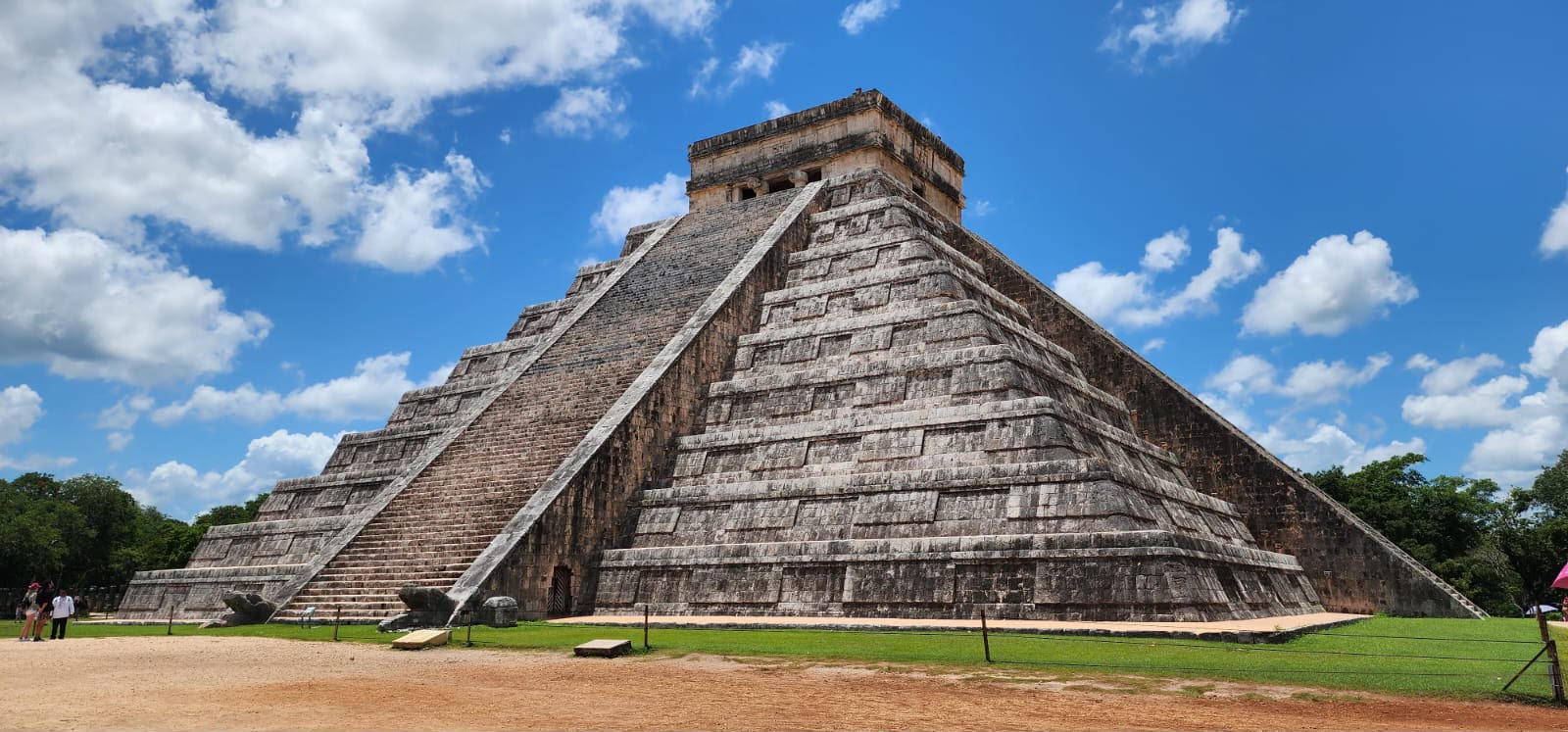
The day trip is long but worth it—if you choose the right departure time, group size, inclusions, and stops.
A Chichen Itza tour from Playa del Carmen is one of those trips that sounds slightly insane when you first look at the map.
You are on the Caribbean coast.
Chichén Itzá is deep inside Yucatán.
The drive takes roughly 2.5 to 3 hours each way, depending on traffic, your pickup point and how many hotel stops are involved. One current Playa del Carmen travel review puts the journey at about three hours in each direction, while faster private transfers can bring that closer to 2.5 hours.
And yet?
I still think it is worth doing.
The mistake is not taking the day trip.
The mistake is taking the wrong version of it.
There is a huge difference between arriving near opening time with a small group and a good guide versus reaching El Castillo at noon after two hotel pickups, a tequila sales presentation and forty minutes inside a souvenir store you never requested.
Same pyramid.
Completely different emotional experience.
So if you are trying to figure out the best Chichen Itza tour from Playa del Carmen, this is how I would choose in 2026.
How Far Is Chichen Itza from Playa del Carmen?
By road, plan roughly 2.5–3 hours each way.
That means Chichén Itzá is a full-day excursion, not something I would casually combine with dinner reservations back in Playa at 6:30 p.m.
A normal day looks roughly like:
6:00–7:00 a.m. — Pickup
9:00–10:00 a.m. — Arrive around Chichén Itzá
2–4 hours — Archaeological site
Afternoon — Cenote / lunch / Valladolid
Evening — Return to Playa
Tours with several hotel pickups or additional attractions can easily become 12–14-hour days.
That does not automatically make them bad.
It just means you should know what you are buying before the van appears downstairs.
Chichen Itza Tour from Playa del Carmen: Which Type Should You Choose?
Here is how I think about it.
Tour TypeBest ForMain AdvantageMain Downside | |||
|---|---|---|---|
Large group | Budget travelers | Cheapest | More waiting |
Small group | Couples / friends | Best balance | Higher price |
Private | Families / groups | Total flexibility | Highest upfront cost |
Express | Travelers short on time | Faster return | Fewer extra stops |
Chichén + cenote | Most first-timers | Best all-around day | Full-day commitment |
Chichén + Cobá | History lovers | Two major Maya cities | Very long day |
Large Group Tours
These are usually the cheapest.
You get:
Coach transportation
Guide
Chichén Itzá
Usually lunch
Often a cenote
Sometimes Valladolid
The compromise is obvious.
More people means more waiting.
One person disappears into the restroom.
Another thinks “meet back at the bus at 3:10” means 3:27.
Suddenly your archaeological excursion has become a social experiment.
Current 2026 tour listings show some basic options advertised from around $50–$130 USD, although low headline prices often exclude archaeological taxes or other fees.
Always compare the final price, not the first number on the booking page.
Small-Group Tours
This is probably what I would choose as a couple.
You still split the transportation cost with other travelers, but instead of 45 people, you might have 8–15.
That usually means:
Faster hotel pickups
Easier bathroom stops
More interaction with your guide
Less waiting
A better chance of keeping the itinerary on schedule
Current premium small-group listings from Playa commonly land around the $100–$200 USD range depending on inclusions.
Private Chichen Itza Tours
Private looks expensive until there are four or five people in your group.
Then the mathematics start behaving differently.
Current 2026 private tours from Playa start around $249–$300 USD on some marketplaces and go beyond $400 depending on group size, vehicle and itinerary.
The real luxury is not leather seats.
It is saying:
“We don't care about the tequila stop.”
and simply continuing to Chichén Itzá.
For families, this is particularly valuable.
Kids do not always respect a carefully prepared archaeological schedule.
Very inconsiderate.
What Should a Good Chichen Itza Tour Include?
Ahrefs showed this as one of the biggest content themes across ranking pages, and I agree because this is where “cheap” tours become expensive.
Before paying, check whether your tour includes:
Roundtrip transportation from Playa del Carmen
Archaeological admission
Yucatán state fee
Guide
Cenote admission
Life jacket
Lunch
Drinks
Valladolid stop
Hotel pickup versus central meeting point
The Current Chichen Itza Entrance Fees Matter
As of September 2026, INAH lists a federal admission fee of MXN $105, plus a separate Yucatán state charge.
Current additional state fees are:
Foreign visitors: MXN $548
Mexican visitors: MXN $190
Yucatán residents: exempt from that state fee
So a normal foreign visitor currently pays MXN $653 total, while a Mexican visitor pays MXN $295, before any separate services.
This is exactly why a $39 tour that excludes entrance fees is not necessarily cheaper than a $100 tour that includes everything.
The site currently opens 8:00 a.m.–4:00 p.m., with last entry at 3:00 p.m.
Official INAH Chichén Itzá visitor information
Get There Early — But Understand What “Early Access” Means
This was one of the biggest corrections I made from the earlier draft.
Chichén Itzá officially opens at 8:00 a.m.
There is not a standard public ticket that magically lets normal visitors stroll inside at 7:00 a.m. while everyone else waits outside.
INAH does offer visits outside regular operating hours for a higher fee, but that is different from the normal “early access” wording you see in tour advertising.
So usually, when a tour says early access, what it really means is:
You leave Playa extremely early.
You arrive around opening.
You beat the large midday wave.
That alone is valuable.
Lonely Planet also recommends arriving at opening because both temperatures and crowds get much worse later in the morning.
Lonely Planet’s first-time Chichén Itzá guide
My recommendation?
Take the early alarm.
Your 5:15 a.m. self will hate me.
Your 12:30 p.m. self standing beside people who just arrived will understand.
What Should You Actually See at Chichen Itza?
El Castillo gets all the attention.
Correctly, to be fair.
It is spectacular.
But please do not photograph the pyramid, buy a magnet and assume the project is complete.
You should also see:
The Great Ball Court
The scale is ridiculous in person.
This is where a guide becomes useful because the architecture, carvings, acoustics and ceremonial significance are much more interesting once someone explains what you are actually looking at.
Temple of the Warriors
The columns and surrounding architecture give you a completely different sense of the city's scale.
El Caracol
The circular structure traditionally associated with astronomical observation is visually completely different from El Castillo.
The Sacred Cenote
You cannot swim here.
I need to say that because this article later tells you to swim in a cenote and someone somewhere will combine the instructions.
This was part of Chichén Itzá's ceremonial landscape.
We look respectfully.
We do not cannonball.
The new Gran Museo de Chichén Itzá is also included with archaeological admission and currently operates until 5:00 p.m., although many organized tours will not give you enough time to visit it properly.
Is Hiring a Guide Worth It?
For Chichén Itzá?
Yes.
Especially your first time.
A good guide transforms the experience from:
ancient stone building
into:
why this city became politically important, how architecture changed through different periods, how ritual spaces functioned, and why certain details appear where they do.
I would spend money on a knowledgeable guide before spending it on luxury transportation.
One helps you understand Chichén Itzá.
The other has nicer cupholders.
Your priorities may vary.
Which Cenote Should You Combine with Chichen Itza?
For most travelers, Chichén Itzá + cenote is the combination I recommend.
You spend several hours under Yucatán sun.
Then you jump into cold freshwater.
Human civilization has made several excellent decisions.
This is one of them.
Cenote Ik Kil
Ik Kil is the obvious option because it sits very close to Chichén Itzá.
It is open-air, dramatic and famous for the vegetation hanging down its limestone walls.
It is also not remotely secret.
Current official 2026 admission is MXN $240, including general access, life jacket, locker and parking.
Official Cenote Ik Kil prices and visitor information
If your tour includes Ik Kil, great.
Just expect company.
Cenote Suytun
Suytun is closer to Valladolid and is the one you have probably seen in photographs with the circular platform under a beam of light.
The current online advance ticket can be as low as MXN $250, while the full day pass costs MXN $420 and includes additional facilities and food. Suytun currently opens from 9:00 a.m. to 5:00 p.m., with final cenote access at 4:00 p.m.
Official Cenote Suytun visitor information
One useful local detail:
Yucatán is one hour behind Quintana Roo.
Suytun itself warns visitors coming from Playa, Cancún or Tulum about the time difference.
Your tour company handles this.
Your rental car does not possess this ability.
Should You Add Valladolid?
Yes, if the schedule gives you enough time to actually see something.
No, if “Valladolid stop” means:
everyone has twelve minutes to photograph the church and return to the bus.
Valladolid sits around 45 km from Chichén Itzá and is officially one of Yucatán's Pueblos Mágicos. Yucatán Tourism highlights the historic center, San Bernardino de Siena, local markets, cenotes and regional food.
Official Yucatán Tourism guide to Valladolid
Travel + Leisure also published a fresh 2026 destination guide highlighting Valladolid as an overlooked Yucatán stop worth more attention than most day-trippers give it.
Travel + Leisure’s Valladolid guide
If you have an hour:
Walk around.
Eat something.
Try longaniza de Valladolid.
Look at buildings that are not archaeological ruins for a moment.
Excellent palate cleanser.
Should You Combine Chichen Itza and Coba?
For most first-time visitors?
Probably not necessary.
For someone genuinely interested in Maya history?
Absolutely.
Cobá feels completely different.
Chichén Itzá is monumental, open and heavily visited.
Cobá spreads through jungle and is connected by ancient raised roads called sacbe'ob.
And there has been a major update:
Nohoch Mul is climbable again.
INAH reopened the 42-meter structure in December 2025 after six years of closure.
INAH announcement on the reopening of Nohoch Mul at Cobá
That makes a Chichen Itza and Coba tour genuinely appealing in 2026.
But understand what you're signing up for.
It is a long day.
This is not the option I would choose with a toddler, a late-night reservation or a group whose relationship begins deteriorating after hour six inside a van.
What About Driving Yourself?
This is where the keyword “Playa del Carmen to Chichen Itza” becomes important.
You do not need a tour.
Driving yourself gives you complete control over:
Departure time
Cenote choice
Valladolid
Lunch
How long you spend at the site
For confident drivers, it is a perfectly reasonable option.
I would leave Playa very early and aim for the gates near opening.
Remember the time-zone change when crossing from Quintana Roo into Yucatán.
And budget for:
Rental car
Fuel
Road tolls where applicable
Parking
Archaeological admission
Cenote admission
Guide if you hire one at the site
The advantage of the tour is not that Chichén Itzá becomes impossible without one.
It is that someone else deals with everything.
There are vacation days when I want freedom.
There are also vacation days when I want somebody to tell me where the van is.
Watch Out for the Souvenir-Stop Problem
This deserves its own section because Ahrefs shows booking and itinerary transparency as a major topic in the pages already ranking.
Some tours include community, artisan or tequila stops that can genuinely add cultural value.
Others include a shop because the operator has a commercial agreement with the shop.
Those are not automatically the same thing.
Before booking, look at the complete itinerary.
If a tour gives you:
90 minutes at Chichén Itzá
and
60 minutes at a souvenir store
I have questions.
Your limited vacation time has value too.
What to Bring on a Chichen Itza Day Trip
My actual list:
Hat
Sunglasses
Comfortable walking shoes
Lightweight clothing
Swimsuit underneath your clothes
Towel
Water shoes if using a cenote
Reusable water bottle
Small amount of cash
Phone/camera
Portable battery
INAH recommends comfortable clothing, proper footwear and sun protection when visiting archaeological sites.
Do not wear your favorite white outfit.
There is dust.
There is humidity.
There is cenote water.
The outfit deserves another vacation.
Which Chichen Itza Tour Would I Choose?
If I were traveling solo:
Good group tour.
If I were traveling with my girlfriend:
Small group, early departure, Chichén + cenote + Valladolid.
If four friends were coming with me:
Compare private pricing immediately.
If my parents were visiting:
Private. No question.
If I were really into Maya archaeology:
Private Chichén + Cobá.
If I had only three days in Playa:
Express or focused Chichén Itzá tour.
That is really the decision.
There is no universally best tour.
There is a best tour for your schedule, group and tolerance for waiting.
For YoyoPass, I would internally link this article to Chichén Itzá & Underground River for travelers wanting the complete cultural + cenote day, and Chichén Itzá Express for travelers who want the archaeological site without sacrificing their entire evening.
Is Chichen Itza from Playa del Carmen Worth It?
Yes.
It is a long day.
You will probably fall asleep during the return drive.
Your clothes may be slightly damp from the cenote.
Someone in the van will almost certainly snore.
Still worth it.
Chichén Itzá is one of those places that actually survives the hype.
But I think the best version of the experience is not:
arrive, photograph El Castillo, leave.
It is seeing a little more of Yucatán along the way.
The ruins.
A cenote.
Valladolid.
Regional food.
Maybe Cobá if you're ambitious.
That is when the long drive starts feeling less like transportation and more like part of the trip.
Keep Planning Your Trip
Continue with [Playa del Carmen guide](/blog/playa-del-carmen-guide), [Maya ruins in Quintana Roo](/blog/best-mayan-ruins-quintana-roo), [best cenotes in Quintana Roo](/blog/best-cenotes-quintana-roo), or browse YoyoPass experiences when you are ready to compare activities.
Check Official Information Before You Go
Opening hours, access rules, weather guidance and transport schedules can change. Check the primary sources below shortly before your visit instead of relying on an old screenshot:
Frequently Asked Questions
How far is Chichen Itza from Playa del Carmen?
Plan approximately 2.5–3 hours by road each way, depending on traffic, pickup logistics and your exact route.
What is the best Chichen Itza tour from Playa del Carmen?
For most couples and small groups, I would choose an early-departure small-group tour that includes Chichén Itzá, a cenote and Valladolid.
Large-group tours are better for budget travelers; private tours are best for families and groups.
What time should I arrive?
As close to the official 8:00 a.m. opening as possible.
Chichén Itzá currently operates until 4:00 p.m., with last admission at 3:00 p.m.
Can you climb Chichen Itza?
No.
El Castillo cannot be climbed.
If climbing an archaeological structure matters to you, Nohoch Mul at Cobá reopened for controlled climbing in December 2025.
Is Valladolid worth adding?
Yes, if you can spend at least 45–60 minutes there.
It adds food, colonial architecture and a different side of Yucatán to an otherwise archaeology-heavy day.
Should I visit a cenote with Chichen Itza?
Yes.
For most travelers, I think it makes the day better.
Ik Kil is the most convenient and famous option; Suytun is a stronger choice when photography and Valladolid are already part of your itinerary.
CMS-ready article ends
Editorial link record — do not paste into the article
Outbound links used
Internal links used
Change log
Rebuilt the search intent around
Chichen Itza tour from Playa del Carmenusing Ahrefs and Google Ads Keyword Planner data.Rewrote the H1, SEO title, meta description, excerpt and opening so the main query is answered immediately.
Preserved useful original explanations and the approved local YoyoPass voice instead of replacing them with generic copy.
Added authoritative outbound sources inside the publishable article and a natural internal-link path to related YoyoPass content.
Kept the live slug unchanged to avoid unnecessary migration and redirect risk.
Best Cenotes in Quintana Roo: A Regional Guide for 2026
CMS and SEO pack
Field | Final value |
|---|---|
Live URL to keep |
|
H1 | Best Cenotes in Quintana Roo: A Regional Guide for 2026 |
SEO title | Best Cenotes in Quintana Roo: 2026 Regional Guide |
Meta description | Discover the best cenotes in Quintana Roo by area, with honest advice on crowds, access, swimming, prices, safety, and protecting the water. |
Slug |
|
Primary keyword | best cenotes Riviera Maya |
Supporting keywords | cenote Riviera Maya; best cenotes in Quintana Roo; Riviera Maya cenotes; cenotes near Tulum |
Excerpt | A regional cenote guide for travelers choosing between open pools, cave systems, family stops, diving sites, and quieter southern options. |
Content cluster | Cenotes and freshwater experiences |
Keyword research snapshot — 21 September 2026
Source | Result |
|---|---|
Ahrefs, United States | 20 US searches/month; KD 0; parent topic 'cenote Riviera Maya' 200 |
Google Ads Keyword Planner, United States/English | 70 US searches/month; LOW competition; competition index 17 |
Keyword Planner competition describes advertiser competition, not organic ranking difficulty. Ahrefs KD and search volume are third-party estimates; use both directionally rather than treating either as exact traffic.
CMS-ready article begins
Best Cenotes in Quintana Roo: A Regional Guide for 2026
Choosing the best cenotes in Quintana Roo is difficult for the same reason choosing the best taco is difficult: there are too many, the answer depends on your mood, and somebody will become personally offended by your ranking.
This page is the regional guide. It compares cenotes across the Riviera Maya and wider Quintana Roo by experience—open swimming holes, caves, diving sites, family-friendly parks and quieter local stops. If you specifically need a one-day route from Cancún, use our separate Cancún cenote guide; this article is for deciding which part of the state deserves your swimsuit.
Cenotes Near Tulum
Tulum has some of the most famous cenotes in Quintana Roo.
It also has some of the highest entrance prices, because apparently the underground water knows it is close to the hotel zone.
Gran Cenote
Gran Cenote combines open swimming areas, covered passages, and small caverns. It is one of the easiest cenotes for swimming and snorkeling, although it can become crowded quickly because of its location near Tulum.
Type: Semi-open with cave sections
Approximate entrance fee: MXN $500–$600
Hours: 8:00 a.m.–4:45 p.m.
Difficulty: Easy
Best for: Families, snorkeling, and first-time visitors
My tip: Arrive when it opens. By midmorning, it can feel less like a natural wonder and more like a company-wide meeting inside the water.
Admission often includes a life jacket, while lockers and snorkeling equipment may cost extra. The entrance is located along the road from Tulum to Cobá.
Cenote Dos Ojos
Dos Ojos is part of an enormous flooded cave system. Its name means “Two Eyes,” referring to its two circular entrances, which are connected underground.
It is one of the most famous places in Mexico for cavern snorkeling and cave diving.
Type: Semi-open and cave
Approximate entrance fee: MXN $400–$500 for basic access
Hours: 8:00 a.m.–5:00 p.m.
Difficulty: Moderate
Best for: Snorkeling, cavern exploration, and certified divers
My tip: The road from the highway entrance to the actual cenote is long. Do not let a colectivo drop you at the main gate and assume you have arrived. You still have an important conversation with a taxi ahead of you.
Guided routes into deeper areas, including the Bat Cave and diving sections, cost extra.
Cenote Calavera
Cenote Calavera gets its name from the three openings in its ceiling, which resemble the eyes and mouth of a skull when viewed from above.
Its most famous entrance involves jumping directly through one of the openings into the water.
Type: Semi-open
Approximate entrance fee: MXN $250
Hours: 9:00 a.m.–5:00 p.m.
Difficulty: Moderate
Best for: Couples, younger travelers, and people who enjoy jumping
My tip: There is also a ladder. You do not have to jump just because someone holding a GoPro shouted, “Come on, it’s fine.”
The space is relatively small, so it is much more enjoyable earlier in the day.
Cenote Car Wash, or Aktun Ha
Its nickname comes from the time when taxi drivers in Tulum reportedly used the water to wash their vehicles.
Fortunately, that service is no longer included in the visitor experience.
Car Wash is an open cenote surrounded by vegetation, with clear water and a more natural atmosphere than many heavily developed sites.
Type: Open
Approximate entrance fee: MXN $200–$300
Reference hours: 9:00 a.m.–5:00 p.m.
Difficulty: Easy to moderate
Best for: Swimming, snorkeling, and relaxing
My tip: Bring a mask. The underwater plants and the way sunlight enters the water are a major part of what makes this cenote special.
Published prices vary depending on the activity, so confirm before arriving.
Want to visit several cenotes without driving or arranging every transfer yourself? Explore cenote tours near Tulum through YoyoPass.
Cenotes Near Playa del Carmen
The next three cenotes are located in almost the same section of Federal Highway 307, between Playa del Carmen and Tulum.
They are easy to combine, but honestly, I would choose two.
Visiting three very similar cenotes in one day can begin to feel like an official audit of life jackets and changing rooms.
Cenote Azul
Cenote Azul is large, open, and has several shallow areas. It is one of the best options for families and travelers who are not comfortable entering a dark cavern immediately.
Type: Open
Approximate entrance fee: MXN $180–$200
Hours: 8:30 a.m.–5:30 p.m.
Difficulty: Easy
Best for: Children, families, and beginner swimmers
My tip: Move away from the main entrance. The side areas are usually quieter.
The property has bathrooms, parking, and equipment rentals. Rates for Quintana Roo residents and children may be different.
Jardín del Edén
Jardín del Edén looks like an enormous natural swimming pool surrounded by jungle. It has deep sections, jumping platforms, and enough space that it can still feel comfortable with several visitors.
Type: Open
Approximate entrance fee: MXN $300 per adult
Hours: 8:00 a.m.–5:00 p.m.; last admission around 4:00 p.m.
Difficulty: Moderate
Best for: Swimming, jumping, and spending several hours
My tip: Check the operating day before visiting. It is currently reported as closed on Saturdays.
I recommend knowing how to swim or wearing a life jacket because some sections are considerably deeper than they appear.
Cenote Cristalino
Cristalino combines open swimming areas, short covered passages, and an easy cave section.
It is compact and can be a good alternative when Cenote Azul or Jardín del Edén feels too crowded.
Type: Semi-open
Approximate entrance fee: MXN $200–$400
Reference hours: 9:00 a.m.–5:00 p.m.
Difficulty: Easy to moderate
Best for: Snorkeling and groups with different swimming abilities
My tip: Walk around the entire property before choosing where to leave your things. The first swimming area you see is not necessarily the best one.
Published prices vary considerably, so confirm whether the life jacket is included.
From Playa del Carmen, you can take a colectivo toward Tulum and ask the driver to drop you near the cenote entrance.
Just remember that crossing Federal Highway 307 with a backpack, wet towel, and zero shade is not exactly the vacation advertisement you imagined.
Find guided cenote experiences from Playa del Carmen through YoyoPass and let someone else handle the transportation.
Cenotes Near Cancun
For travelers staying in Cancun, the Ruta de los Cenotes near Puerto Morelos is the most convenient area.
The route extends inland toward Leona Vicario and includes open cenotes, caves, and adventure parks less than an hour from the city.
Verde Lucero
Verde Lucero is an open emerald-colored cenote with a zipline and jumping platforms.
It is fun, uncomplicated, and especially good for groups.
Type: Open
Approximate entrance fee: MXN $300–$350
Reference hours: 9:00 a.m.–5:00 p.m.
Difficulty: Moderate
Best for: Groups, younger travelers, and adventure activities
My tip: Do not spend the entire visit waiting for the zipline. Swim toward the edges to appreciate the cenote’s size and water color.
Recent rates can vary according to age, residency, and included activities.
Las Mojarras
Las Mojarras is one of the largest open cenotes along the route.
It has platforms and a zipline, but the main attraction is the amount of open space available for swimming.
Type: Open
Approximate entrance fee: MXN $250
Hours: 9:00 a.m.–6:00 p.m.
Difficulty: Easy to moderate
Best for: Families and larger groups
My tip: Wear a life jacket even when you know how to swim. The cenote is large, and distances can look shorter than they really are.
The property is located around kilometer 12.5 of the Ruta de los Cenotes.
Siete Bocas
Siete Bocas connects several natural openings within one cavern system.
Some entrances receive direct sunlight, while others feel completely underground.
Type: Semi-open and cave
Approximate entrance fee: MXN $300–$400
Hours: 8:30 a.m.–5:00 p.m.
Difficulty: Moderate
Best for: Cave exploration and snorkeling
My tip: Give yourself at least two hours. Visiting only one of the “seven openings” slightly defeats the concept.
Paths can be slippery, and some areas require more confidence in the water.
Public transportation between individual cenotes along the route is limited. You can reach Puerto Morelos by bus or colectivo, but you will normally need a taxi, rental car, or organized tour to explore the route.
Explore Ruta de los Cenotes tours through YoyoPass when you would rather use your energy for swimming than searching for unmarked dirt-road entrances.
Cenotes Near Valladolid
Valladolid is located in Yucatán state, not Quintana Roo.
I am including it because it is one of the most popular day trips from Cancun and the Riviera Maya, especially when combined with Chichén Itzá.
One important detail: Yucatán is one hour behind Quintana Roo. Your phone will normally adjust automatically, but after two and a half hours on the road, your brain may choose not to participate.
Cenote Suytun
Suytun is famous for the circular stone platform positioned beneath a narrow beam of light inside the cavern.
It is impressive, but it is also one of the most photography-focused cenotes in the region.
Type: Cave
Entrance fee: MXN $420 with the published day pass
Cenote hours: 9:00 a.m.–4:00 p.m.
Difficulty: Easy
Best for: Photography and couples
My tip: Do not expect to keep the platform to yourself for twenty minutes. Take the photo and let the line continue. Everyone came to create their own magazine cover.
The current day pass includes cenote access, a swimming pool, one meal, and the Ruta del Alux experience.
Cenote Samulá
Samulá is located within the Dzitnup complex beside X’kekén.
An opening in the ceiling allows sunlight to reach the water, while long tree roots descend from the surface into the cavern.
Type: Cave
Approximate entrance fee: MXN $220–$250 for combined access to Samulá and X’kekén
Hours: 9:00 a.m.–5:00 p.m.
Difficulty: Easy to moderate
Best for: Families and trips combined with Valladolid
My tip: Buy the combined ticket when the price difference is small. You already drove to Valladolid. Reaching the entrance of the second cenote and deciding you have had enough culture would be a strange place to become financially disciplined.
Published rates vary between platforms and dates, so confirm the current individual and combined admission price.
Important Rules When Visiting Cenotes
Shower Before Entering
The shower is not decorative.
It removes sunscreen, makeup, mosquito repellent, perfume, creams, and oils that can pollute the water.
“Biodegradable” Does Not Always Mean Permitted
Many cenotes prohibit all sunscreen in the water, including products labeled biodegradable or reef-safe.
The safest option is to enter without products and protect yourself outside the water with a hat, shade, and long-sleeved UV clothing.
Biodegradable sunscreen is not a diplomatic passport that allows you to ignore the rules.
Do Not Touch Stalactites or Rock Formations
These structures can take thousands of years to grow and can be damaged through simple contact.
Do not use them for balance, hang equipment from them, or touch them to improve a photograph.
Wear a Life Jacket When Required
Some cenotes require life jackets for everyone. Others make them optional.
Wear one when you are not a strong swimmer, when the water is deep, or when visiting with children.
Do Not Bring Speakers
Sound echoes through caves and affects everyone’s experience.
The jungle already has its own soundtrack. It does not need someone adding reggaeton through a waterproof Bluetooth speaker.
How to Visit Cenotes Without a Car
It is possible to visit cenotes without renting a car, although some are much easier to reach than others.
From Playa del Carmen
Colectivos traveling toward Tulum can drop you near Cenote Azul, Cristalino, and Jardín del Edén.
Confirm the stop with the driver before boarding and be prepared to cross or walk beside the highway.
From Tulum
Gran Cenote and Calavera can be reached by taxi, bicycle, or transportation heading toward Cobá.
Car Wash may also be accessible using colectivos along the same road. Dos Ojos is more complicated because there is a considerable distance between the highway entrance and the final cenote access.
From Cancun
You can reach Puerto Morelos by bus or colectivo, but entering and moving between cenotes along the Ruta de los Cenotes normally requires a taxi or organized tour.
From Valladolid
Suytun and Samulá are easy to visit by taxi from the town center.
You can reach Valladolid by bus from Cancun, Playa del Carmen, or Tulum and arrange local transportation after arriving.
When visiting more than one cenote, an organized tour often costs less energy—and occasionally less money—than combining colectivos, taxis, and several conversations beginning with, “Are you sure this is the right place?”
Browse cenote tours available through YoyoPass to compare routes, transportation, admission, and activities before booking.
Which Are the Best Cenotes in Quintana Roo?
That depends on the type of day you want.
Best for families: Cenote Azul
Best for caves: Dos Ojos
Best for photography: Suytun
Best near Cancun: Siete Bocas
Best for several hours of swimming: Jardín del Edén
Best for jumping and adventure: Verde Lucero
Best relaxed experience: Car Wash
Best first visit: Gran Cenote
My recommendation is to visit one open cenote and one cave cenote.
That way, you understand the real variety of these systems instead of leaving with the impression that every cenote is the same swimming pool with a different ticket booth.
Keep Planning Your Trip
Continue with [cenote routes near Cancún](/blog/cenotes-near-cancun-day-trip-routes), [Tulum ruins and beach guide](/blog/tulum-ruins-and-beach-guide), [Playa del Carmen guide](/blog/playa-del-carmen-guide), or browse YoyoPass experiences when you are ready to compare activities.
Check Official Information Before You Go
Opening hours, access rules, weather guidance and transport schedules can change. Check the primary sources below shortly before your visit instead of relying on an old screenshot:
Frequently Asked Questions
How much does it cost to visit cenotes in Quintana Roo?
Independent cenotes generally cost between MXN $180 and $600 per adult.
Parks offering several caves, guides, food, ziplines, or ATVs can cost more than MXN $1,000.
Always ask whether the price includes a life jacket, locker, guide, and snorkeling equipment.
Is it safe to swim in cenotes?
Yes, when you follow the rules, wear a life jacket when necessary, and stay out of restricted areas.
The main risks are depth, slippery surfaces, low lighting, and overestimating your swimming ability.
Inside cave cenotes, stay within authorized areas and never attempt cave diving without certification and a specialized guide.
Can I take children to cenotes?
Yes.
Cenote Azul, Las Mojarras, and some sections of Gran Cenote are good options for families.
Choose cenotes with easy access, shallow areas, bathrooms, and child-sized life jackets. Maintain constant supervision. Clear water does not necessarily mean shallow water.
Do I need to know how to swim?
Not always.
You can enjoy some cenotes from platforms and use a life jacket to enter the water.
Tell the guide or staff when you cannot swim and avoid locations focused on jumping, strong currents, or deep cave areas.
What is the best time to visit cenotes?
At opening time, generally between 8:00 and 9:00 a.m.
There will be fewer groups, cooler temperatures, and better photography conditions.
At some cave cenotes, the strongest beams of sunlight appear closer to midday—but that is also when more visitors arrive.
CMS-ready article ends
Editorial link record — do not paste into the article
Outbound links used
Internal links used
Change log
Rebuilt the search intent around
best cenotes Riviera Mayausing Ahrefs and Google Ads Keyword Planner data.Rewrote the H1, SEO title, meta description, excerpt and opening so the main query is answered immediately.
Preserved useful original explanations and the approved local YoyoPass voice instead of replacing them with generic copy.
Added authoritative outbound sources inside the publishable article and a natural internal-link path to related YoyoPass content.
Kept the live slug unchanged to avoid unnecessary migration and redirect risk.
Best Cenotes Near Cancun: 7 One-Day Routes
CMS and SEO pack
Field | Final value |
|---|---|
Live URL to keep |
|
H1 | Best Cenotes Near Cancun: 7 One-Day Routes |
SEO title | Best Cenotes Near Cancun: 7 Easy Day-Trip Routes |
Meta description | Find the best cenotes near Cancun with seven realistic day-trip routes, driving times, route pairings, crowd tips, safety advice, and what to bring. |
Slug |
|
Primary keyword | cenotes Cancun |
Supporting keywords | cenotes near Cancun; best cenotes near Cancun; Cancun cenote tour; cenote day trip from Cancun |
Excerpt | Seven realistic cenote routes from Cancún, organized by direction and travel style so the day is spent swimming—not zigzagging across Quintana Roo. |
Content cluster | Cenotes and Cancún day trips |
Keyword research snapshot — 21 September 2026
Source | Result |
|---|---|
Ahrefs, United States | 5,000 US searches/month; KD 2; traffic potential 1,600 |
Google Ads Keyword Planner, United States/English | 14,800 US searches/month; MEDIUM competition; competition index 55 |
Keyword Planner competition describes advertiser competition, not organic ranking difficulty. Ahrefs KD and search volume are third-party estimates; use both directionally rather than treating either as exact traffic.
CMS-ready article begins
Best Cenotes Near Cancun: 7 One-Day Routes
Cancún does not have a secret cenote underneath every hotel. The best cenotes near Cancun require a proper day trip, and the route matters more than most listicles admit. Pairing places that sit in opposite directions can turn three swims into six hours of watching Highway 307 through a van window.
These seven routes group cenotes by geography and travel style: easy family swimming, cave adventures, diving, archaeology combinations and quieter stops. Pick one route, leave early and resist the very human urge to save twelve more locations on Google Maps while already driving.
Before You Start: How to Plan a Cancun Cenote Road Trip
For a comfortable day, leave Cancún between 7:00 and 8:00 a.m.
Bring:
Swimsuit already on
Towel and dry clothes
Comfortable shoes or secure sandals
Cash in Mexican pesos
Drinking water
Waterproof phone case or dry bag
Snorkeling mask when you have one
A rash guard or UV-protective shirt
Offline maps
Most cenotes ask visitors to shower before swimming and remove sunscreen, lotion, perfume and insect repellent. These are fragile groundwater systems, not hotel pools with very dramatic landscaping.
The budgets below are per adult and exclude fuel, food, optional guides, photography packages and equipment rentals unless stated otherwise.
Cenotes Near Cancun Route 1: Puerto Morelos Classics
This is the route I would recommend for a first cenote road trip from Cancún.
The Ruta de los Cenotes begins west of Puerto Morelos and extends toward Leona Vicario. It contains dozens of open, semi-open and underground cenotes, with the first entrances roughly 30–40 minutes south of Cancún. The route itself is easy to find from Federal Highway 307, although the individual access roads can be rustic.
Suggested stops
Verde Lucero
An open cenote with emerald-colored water, jumping platforms and a zipline. It is fun, photogenic and easy to understand immediately: climb, jump, swim, repeat until someone announces they are hungry.
Siete Bocas
A cave system with seven natural openings allowing shafts of sunlight into the water. This is the most atmospheric stop of the three and the one I would prioritize for underwater photos.
Boca del Puma
A larger adventure park with open and underground cenotes. Basic swimming access may be available, while full packages add ziplines, ATVs, food and transportation. Current online listings place basic access around MXN $300, while complete packages cost significantly more.
Route snapshot
Drive from Cancún: Approximately 40–55 minutes to the first stop
Total day: 7–9 hours
Expected combined admission: Around MXN $850–$1,100 for basic swimming access
Difficulty: Easy to moderate
Best for: First-time visitors, couples and groups
Best photo stop: Siete Bocas
Lunch: Drive into Puerto Morelos after the final cenote for seafood or tacos
Driving order
Cancún → Highway 307 south → Puerto Morelos/Leona Vicario exit → Siete Bocas → Boca del Puma → Verde Lucero → Puerto Morelos
Siete Bocas is around kilometer 15–15.5, Boca del Puma around kilometer 16 and Verde Lucero around kilometer 17–18, so grouping them together prevents you from spending the day driving back and forth like someone who did not read this article.
Entrance prices reported online currently range from approximately MXN $200–$300 at Verde Lucero, around MXN $300–$400 at Siete Bocas and roughly MXN $300 for basic Boca del Puma access. Confirm directly before leaving, especially when you want activities beyond swimming.
Prefer not to drive? Browse guided Ruta de los Cenotes experiences through YoyoPass and let someone else handle the dirt roads, equipment and timing.
Cenotes Near Cancun Route 2: Puerto Morelos Adventure Circuit
This route also uses the Ruta de los Cenotes, but the experience is more structured and adventurous.
The three parks sit within the same general kilometer-19–20 area, making this less of a road trip and more of a concentrated jungle day. Do not plan to complete every possible activity at all three. Choose two as your main stops and keep the third optional.
Suggested stops
Cenotes Kin-Ha
Kin-Ha is known for large cavern spaces and adventure packages. Its official site currently lists basic adult access around MXN $430, while ATV, zipline and combined packages cost more.
La Noria
A semi-open cave cenote reached through the same general turnoff as Kin-Ha and Zapote. Current published admission is around MXN $400.
Cenotes Zapote Prehistoric Park
Zapote is the most developed stop of the three. Its attractions include several cenotes, guided activities, regional food and unusual bell-shaped underwater formations known as “Hell’s Bells.” The deeper diving areas are for properly certified divers with specialized operators—not for someone who bought a snorkeling mask yesterday and feels spiritually prepared.
Route snapshot
Drive from Cancún: Approximately 50–65 minutes
Total day: 7–10 hours
Expected budget: From roughly MXN $1,200–$2,500, depending on whether you select basic admission or full adventure packages
Difficulty: Moderate
Best for: Active travelers, older families and groups
Best photo stop: La Noria
Lunch: Use the included food at Zapote when your package includes it
Driving order
Cancún → Highway 307 south → Ruta de los Cenotes → kilometer 19 turnoff → Kin-Ha → La Noria → Zapote
Kin-Ha, La Noria and Zapote share the same general access area, with La Noria located opposite or very close to the other parks. Follow the signs once you leave the main paved route.
My recommendation would be Kin-Ha plus La Noria for a simpler self-drive day, or one complete Zapote package when you want everything organized.
Trying to do three adventure parks in one day is not ambition. It is administrative failure wearing water shoes.
Route 3: Playa del Carmen Cenote Circuit
This is one of the easiest multi-cenote routes in the Riviera Maya because Cenote Azul, Jardín del Edén and Cristalino are all located close together along Highway 307, south of Playa del Carmen near the Barceló resort complex.
All three are primarily open-air cenotes, which means this route offers sunlight, clear water, jungle surroundings and easy swimming rather than dramatic underground caverns.
Suggested stops
Cenote Azul
The most family-friendly option, with shallow areas and easy water access.
Jardín del Edén
The largest and most natural-feeling of the three. It offers deeper swimming areas and jumping points, although the paths can be uneven.
Cenote Cristalino
A compact, clear-water cenote with cave-like sections and easy snorkeling.
Route snapshot
Drive from Cancún: Approximately 75–100 minutes
Total day: 8–10 hours
Expected combined admission: Around MXN $800–$1,150
Difficulty: Easy
Best for: Families, casual swimmers and travelers who want three easy stops
Best photo stop: Jardín del Edén
Lunch: Puerto Aventuras or Playa del Carmen
Driving order
Cancún → Highway 307 south → Cenote Azul → Cristalino → Jardín del Edén → lunch in Puerto Aventuras
The entrances sit within a short section of the highway, so the order matters less than arriving early. Current visitor reports place individual prices broadly between MXN $180 and $400, depending on the property and date. Some accept cash only, and equipment or locker rentals may cost extra.
I would personally choose two, not all three, because their environments are relatively similar. Azul plus Jardín del Edén gives you the best contrast between relaxed swimming and a larger, deeper natural pool.
The third stop is there for the person in your group who says, “We came all this way,” as though the first two cenotes were located behind your house.
Route 4: Tulum Cave and Snorkeling Circuit
This is the most visually dramatic route, but it is also one of the longest day trips from Cancún.
The combination of Gran Cenote, Dos Ojos and Taak Bi Ha gives you three distinct experiences: open and semi-open water, a famous cave system and a smaller enclosed cavern with clear blue water and rock formations.
Suggested stops
Gran Cenote
A popular semi-open cenote outside Tulum, known for clear water, snorkeling and small cave sections. Current 2026 visitor information commonly places admission at around MXN $500.
Dos Ojos
One of the region’s best-known cave systems. Standard swimming and snorkeling access has recently been reported around MXN $500, while guided cave experiences cost more.
Taak Bi Ha
Located through the same general Dos Ojos park entrance but farther down the access road. Recent prices have been around MXN $350–$400, often with a life jacket included.
Route snapshot
Drive from Cancún: Approximately 1 hour 45 minutes to 2 hours 15 minutes
Total day: 10–12 hours
Expected combined admission: Around MXN $1,300–$1,500
Difficulty: Moderate
Best for: Snorkelers, photographers and cave lovers
Best photo stop: Taak Bi Ha
Lunch: Tulum Pueblo or Akumal
Driving order
Cancún → Highway 307 south → Dos Ojos/Taak Bi Ha entrance → Dos Ojos → Taak Bi Ha → Gran Cenote → Tulum Pueblo
Dos Ojos and Taak Bi Ha use the same main highway turnoff, although the internal road is several kilometers long. Gran Cenote sits northwest of Tulum on the road toward Cobá.
Start at Dos Ojos when it opens, visit Taak Bi Ha immediately afterward and finish at Gran Cenote only when time and energy allow.
This route includes a lot of driving, swimming and changing clothes. By the third cenote, everyone will have stopped caring whether their hair looks good. That is when vacation officially begins.
Route 5: Valladolid Cenote Photo Route
Suytun and Hubiku are not close enough to Cancún for a casual half-day, but together they create a strong Valladolid-area road trip.
This route is for travelers who care about cave architecture and photography as much as swimming.
Suggested stops
Cenote Suytun
Suytun is famous for its circular stone platform beneath a narrow beam of light. Its current official day pass costs MXN $420 for adults and includes access to the cenotes, pool, one meal and the Ruta del Alux experience. Cenote hours are listed as 9:00 a.m.–4:00 p.m.
Cenote Hubiku
A large enclosed cenote near Temozón, north of Valladolid. Basic admission has historically been lower than Suytun, while packages with food and other attractions cost more. Current public information is inconsistent, so budget approximately MXN $150–$350 and confirm before arrival.
Route snapshot
Drive from Cancún: Approximately 2.5 hours each way
Total day: 11–13 hours
Expected combined admission: Around MXN $570–$800
Difficulty: Easy physically, long driving day
Best for: Couples, photographers and Valladolid visitors
Best photo stop: Suytun
Lunch: Included at Suytun or in central Valladolid
Driving order
Cancún → toll road toward Valladolid → Suytun → Valladolid center → Hubiku → Cancún
Visit Suytun first. The famous beam of sunlight depends on the time of day, but later morning also brings more visitors. Photography here can turn into an unofficial international summit about whose turn it is to stand on the platform.
Be patient. Take the photo. Move aside.
Route 6: Chichén Itzá and Cenote Circuit
This is the classic cultural day trip: archaeological site first, swimming afterward.
Ik Kil, X’kekén and Samulá are among the best-known cenotes around Chichén Itzá and Valladolid. Doing all three plus Chichén Itzá is possible, but only with an early departure and disciplined timing.
Suggested stops
Ik Kil
Located approximately five minutes from Chichén Itzá, Ik Kil is an open cenote surrounded by hanging plants and vertical limestone walls. The official site lists hours from 9:00 a.m.–5:00 p.m., with a life jacket included; recent 2026 visitor reports place basic admission around MXN $250.
X’kekén and Samulá
These two cave cenotes sit together near Dzitnup, outside Valladolid. Current visitor information lists a combined ticket around MXN $125, with possible additional life-jacket charges.
Route snapshot
Drive from Cancún: Approximately 2.5–3 hours
Total day: 12–14 hours with Chichén Itzá
Expected cenote admission: Around MXN $375–$450, excluding Chichén Itzá
Difficulty: Moderate due to the long day
Best for: First-time Yucatán visitors
Best photo stop: Ik Kil
Lunch: Near Chichén Itzá or Valladolid
Driving order
Cancún → Chichén Itzá → Ik Kil → X’kekén and Samulá → Valladolid → Cancún
Reach Chichén Itzá at opening, visit Ik Kil before the largest afternoon groups arrive, then decide whether you realistically still want two more cenotes.
This is where maturity becomes important.
You are allowed to say, “One cenote was enough.” The tourism police will not arrest you.
For a day this long, a guided Chichén Itzá and cenote tour through YoyoPass is often easier than self-driving. You can rest on the return instead of spending three hours staring into the darkness of the toll road.
Route 7: All-in-One Cenote Experiences
This final route is not about driving from independent entrance to independent entrance.
It is for travelers who want transportation, equipment, guides, food and a complete itinerary handled for them.
Choose one of these experiences. Doing both on the same day would require time travel and a questionable approach to hydration.
Xenotes by Xcaret
Xenotes is a full-day guided tour visiting four different types of cenotes. Activities can include kayaking, snorkeling, assisted rappelling, ziplines and swimming. Roundtrip hotel transportation is included, and the complete experience lasts approximately eight hours. Current public rates begin around USD $159, although pricing varies by date, pickup point and promotion.
Kantun Chi
Kantun Chi is a cenote and cave park south of Playa del Carmen near Puerto Aventuras. Visitors can choose experiences involving four or five cenotes, kayaking and guided underground-river routes. Current official rates range from approximately MXN $1,465 for a guided underground-river and cenote experience to MXN $1,785 for the more complete guided option, with advance-booking discounts sometimes available.
Route snapshot
Drive from Cancún: None when hotel transportation is included with Xenotes; approximately 90 minutes to Kantun Chi by car
Total day: 8–11 hours
Expected cost: Around USD $159 for Xenotes; approximately MXN $1,465–$1,785 for guided Kantun Chi experiences
Difficulty: Easy to moderate, depending on activities
Best for: First-time travelers, families and people who hate logistical uncertainty
Best photo stop: Depends on the selected circuit
Lunch: Included in several packages; verify before booking
Convenience costs more, but it has value.
You do not need to find dirt-road entrances, rent equipment separately or negotiate with the group member who insists the next stop is “only ten minutes away” despite all available evidence.
Explore guided cenote experiences through YoyoPass and compare transportation, activities, food and booking conditions in one place.
My Honest Cenote Road-Trip Recommendation
For most travelers staying in Cancún, I would choose one of these three:
Best first-time route: Puerto Morelos Classics
Best easy swimming route: Playa del Carmen Circuit
Best no-stress option: Xenotes or a guided Ruta de los Cenotes tour
Do not select a route only because one cenote photographs well. Think about the entire day: distance, road condition, swimming ability, budget and how much time you genuinely want to spend inside a car.
And remember: cenote water is cold.
It does not matter how confidently you walk toward it. Everyone eventually enters using the same sequence of small noises and immediate regret.
Then, thirty seconds later, it feels perfect.
Keep Planning Your Trip
Continue with [best cenotes in Quintana Roo](/blog/best-cenotes-quintana-roo), [3-day Cancún itinerary](/blog/what-to-do-in-cancun-three-days), [Cancún packing list](/blog/what-to-pack-for-cancun), or browse YoyoPass experiences when you are ready to compare activities.
Check Official Information Before You Go
Opening hours, access rules, weather guidance and transport schedules can change. Check the primary sources below shortly before your visit instead of relying on an old screenshot:
Frequently Asked Questions
How far are cenotes from Cancun?
The closest major concentration is the Ruta de los Cenotes near Puerto Morelos, approximately 30–60 minutes from Cancún depending on the specific entrance and your starting point.
Cenotes near Playa del Carmen take roughly 75–100 minutes, while the Tulum, Valladolid and Chichén Itzá routes require approximately two to three hours of driving each way.
Can I visit cenotes without a car?
Yes.
Guided tours are the easiest option from Cancún and usually include transportation, admission and equipment. You can also use buses or colectivos for some cenotes along Highway 307, particularly near Playa del Carmen, but reaching individual entrances may require walking beside the highway or using a taxi. Southbound colectivos from Playa del Carmen can drop passengers near the Azul, Cristalino and Jardín del Edén entrances.
The Ruta de los Cenotes is much easier with a car or organized tour because the properties are spread along a rural road.
How many cenotes can you visit in one day?
Two is comfortable. Three is possible when they are close together.
More than three usually means rushing through each stop, spending too much time changing clothes and developing strong feelings about wet towels.
For longer routes from Cancún, one or two cenotes plus a cultural stop such as Valladolid or Chichén Itzá creates a better day.
Is the Ruta de los Cenotes worth it?
Yes. It is the best cenote area for travelers based in Cancún because it offers open pools, caves, ziplines, snorkeling and adventure parks along one road.
It also lets you build the day around your budget instead of committing to a long drive toward Tulum or Valladolid.
Do I need to pay for each cenote separately?
At independently operated cenotes, yes. Each property normally has its own admission charge, rules and optional rentals.
Adventure parks such as Zapote, Xenotes and Kantun Chi bundle several cenotes or activities into one ticket. Always check what the price includes because “admission” may refer only to swimming, while food, guides, lockers, ziplines or ATVs cost extra.
Chichen Itza Tour from Playa del Carmen: 2026 Guide and Best Options